Mold Remediation Help for Sugar Hill Homeowners
Musty smell, ceiling stain or bubbling paint? Hawaiiperforming Mold Help connects you with an independent local mold provider in the Sugar Hill area so you can act while the problem is small.
- Independent local providers, not a call center script
- Inspection and testing
- Remediation and black mold removal
- Request an estimate, no obligation
Get an estimate
Why Choose Hawaiiperforming Mold Help?
- Built for Early Action
Most of what we cover is the first stage of mold: smells, spots and damp areas that are easy to deal with now. - Independent Providers
Each provider runs their own business, sets their own prices and does the work. Hawaiiperforming Mold Help only makes the introduction. - Less Searching
Skip the endless listings. Request a callback to check provider availability, or send one request and let a provider reach out. - Clear Next Steps
Inspect, test if needed, then remediate. You get a logical path and a written quote to compare.
How It Works
- Note the Signs Write down odors, stains, damp spots and when they started. Take a few photos.
- Call or Request an Estimate Request a callback to check provider availability, or use the request form.
- Review the Written Scope Compare containment, removal, drying and the plan for the moisture source.
- Schedule and Follow Up Confirm the timing, then ask about a final check and prevention tips.
Hawaiiperforming Mold Help Is Proud To Serve the Sugar Hill area
Need help in Sugar Hill?
- Independent local providers, not a call center script
- Inspection and testing
- Remediation and black mold removal
- Request an estimate, no obligation
Small Mold Signs Deserve a Quick Look
Mold rarely starts as a crisis. It starts as a faint musty smell, a ceiling stain that was not there last month, or paint that bubbles near a window. Those are early warning signs. They give you the easiest window to act.
Hawaiiperforming Mold Help is a referral service for homeowners in Sugar Hill, GA and the Sugar Hill area. We do not inspect or remove mold ourselves. We connect you with independent local providers in our network who do.
The process is simple:
- A provider inspects the home and, if needed, tests air or surfaces.
- The findings show what is growing, where, and why.
- A remediation plan targets the moisture source and the affected materials.
Hot humid summers, thunderstorms and tropical remnants keep many Georgia homes damp. Catching a problem early usually means a smaller repair.
Request a callback to check provider availability for mold inspection, testing or residential mold removal.
Would you rather write it down first? Request an estimate and describe what you found.
How It Works
What Hawaiiperforming Mold Help Is
Hawaiiperforming Mold Help is a referral service. It is not a mold company. It has no crews and does no testing or cleanup. Its job is to shorten the distance between a homeowner with a concern and an independent provider who can look at it.
What Happens After You Reach Out
You describe the signs: where, what it smells or looks like, and whether there was a leak or storm. You are then pointed to a local provider in our network. The provider sets the visit, the scope and the price. Ask for the scope and price in writing.
Why Early Signs Matter
Mold needs moisture, a food source and time. Drywall, wood and insulation all qualify. A small patch on a bathroom ceiling may mean a surface clean and a vent fix. The same patch left alone for a season can spread behind walls and into framing.
What to Ask a Provider
- Do you offer inspection, testing and removal, or only one of them?
- Do you offer certified mold testing, and who analyzes the samples?
- How will you find and address the moisture source?
- Will I get a written scope and quote before work starts?
Providers set their own credentials, pricing and schedules. Confirm each one directly before you hire.
Serving Sugar Hill and Beyond
Hawaiiperforming Mold Help covers Sugar Hill and the Sugar Hill area. Homes here vary a lot. Older mill-era houses often have crawl spaces, aging siding and tight, damp corners. Newer subdivisions tend to have slab foundations, vinyl or brick exteriors, and sealed envelopes that trap indoor humidity.
Both types can develop mold. Long humid summers, heavy thunderstorms, the occasional ice storm and rain from tropical systems all add moisture. A leaking roof, a clogged gutter or a sweating duct can be enough.
If you are searching for mold inspection near me, start with a local provider who knows how these homes behave. Request a callback to check provider availability in your part of the service area.
You can also request an estimate online and add notes about your foundation type and the room affected.
Local Homes, Weather and Mold Risks
Humid Summers Test Every House
Warm, wet air settles into closets, attics and crawl spaces. When indoor humidity stays high for weeks, surfaces stay damp. That is enough for mold to start.
Crawl Spaces Hide Problems
A damp crawl space can send musty air up through the floor. Look for sagging insulation, standing water or fuzzy growth on joists. A provider can check ventilation, vapor barriers and drainage.
Slab Homes Have Their Own Weak Spots
Without a crawl space, moisture shows up elsewhere. Think plumbing leaks under flooring, damp baseboards and condensation on cold slab edges. Peeling floor coverings are worth a look.
Storm Damage Opens Doors
Thunderstorms and tropical remnants can push water past flashing, windows and siding. Some policies may cover sudden damage, so check your policy. Providers can often help document damage for a claim.
Ice Storms Leave Slow Leaks
Ice can lift shingles and back up gutters. The leak that follows may stay hidden in an attic for weeks. Brown ceiling stains after a cold snap are a clue.
Older Houses Need Careful Reading
Mill-era homes may have original plumbing, worn caulk and little ventilation. A musty smell in a back room or basement corner deserves a closer inspection.
Newer Subdivisions Are Not Exempt
Tight construction holds humidity. A bathroom fan that vents into the attic, or an air conditioner that runs oversized, can leave damp air behind. Watch windows for lasting condensation.
Typical Costs Vary
In the U.S., a basic inspection often runs a few hundred dollars, and lab testing adds more. Remediation can range from several hundred dollars for a small area to several thousand for larger jobs. Costs vary by job, so get a written quote.
What To Do Today
Take photos, note the date, fix any active leak you can safely reach, and avoid disturbing the growth. Then reach out to a provider.
Reach a Provider
See a stain, smell something musty or know water got in? Do not wait for it to spread. Request a callback to check provider availability and describe what you found.
If you would rather start in writing, request an estimate and a local provider can follow up. There is no obligation.
Core Services
Providers in our network cover three areas: remediation of active mold, inspection and testing to find and confirm it, and removal of dark, suspected black mold growth. Pick the card that matches your situation.
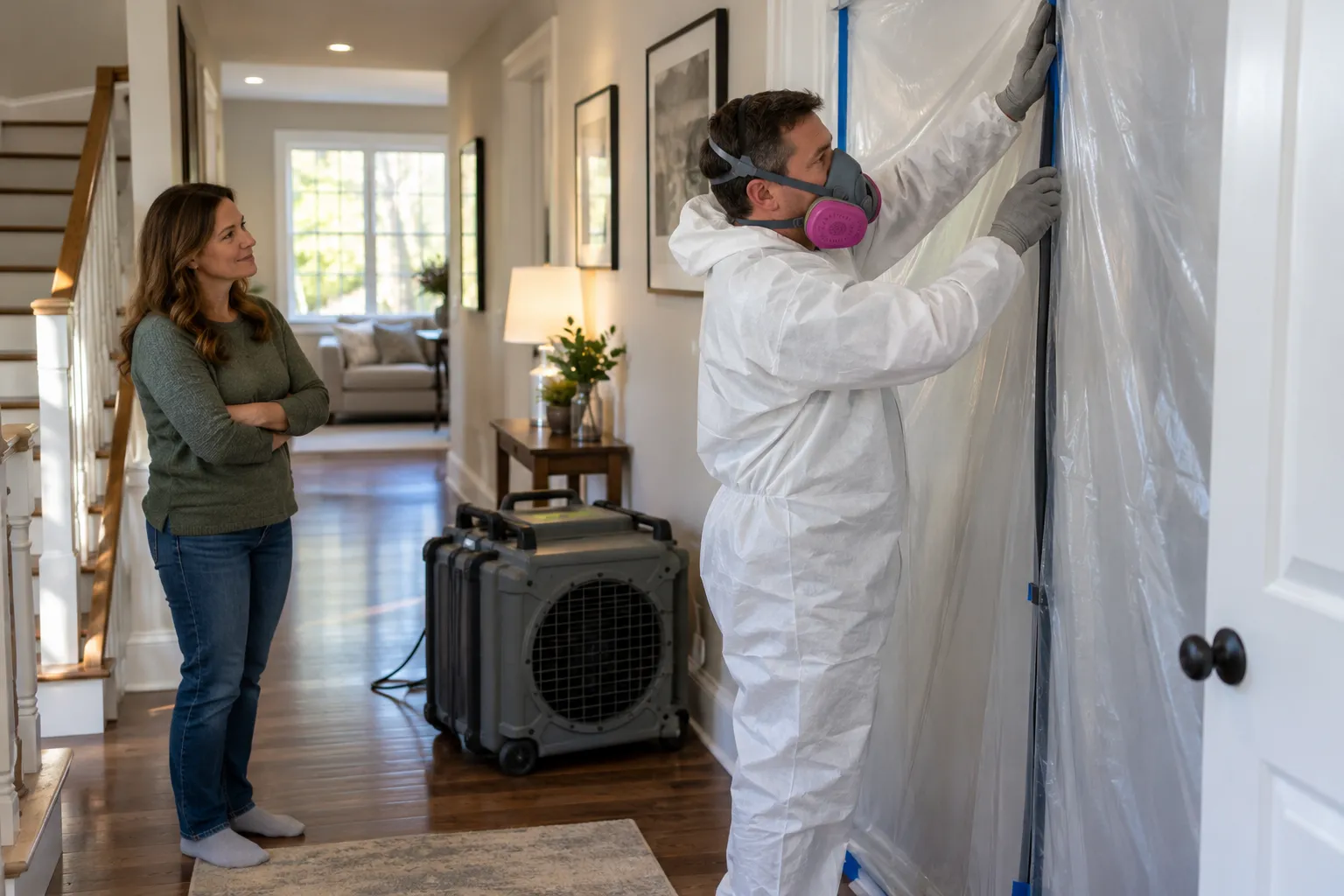 Mold RemediationSpot the early signs of mold, then get connected with an independent local provider who can assess and treat it.
 Mold Inspection & TestingMusty odors, stains and damp spots are early signs, and a local inspection can confirm what they mean.
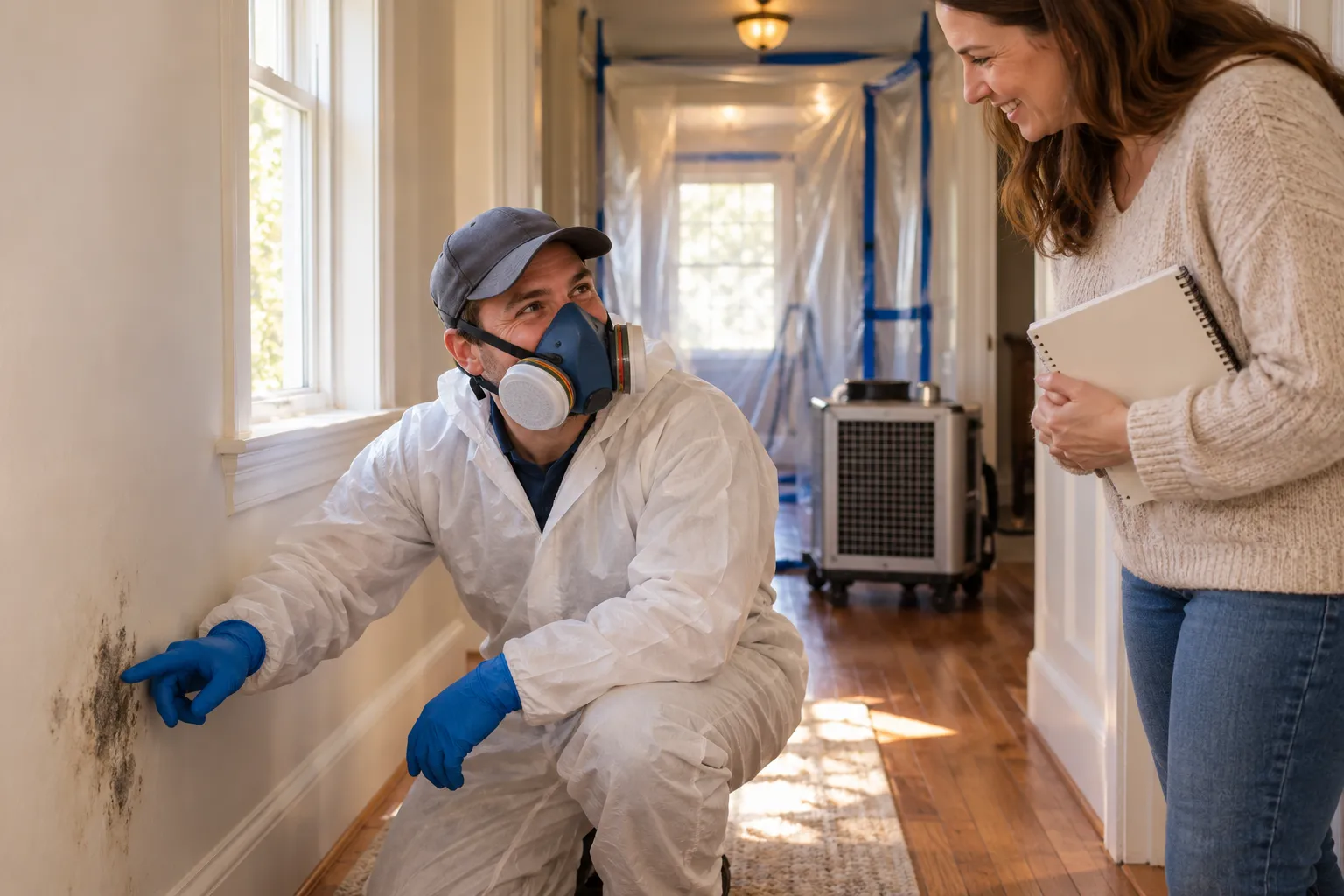 Black Mold Removal ServicesSpot dark growth or a musty odor? Get connected with an independent local provider before the damage spreads.
Mold Questions Homeowners Ask
How do I know if I have mold in my house?
Common signs are a musty odor, visible spots, water stains, peeling paint and warped surfaces near leaks. Mold can also hide in walls. If you suspect it, a local provider can inspect the area and recommend whether testing makes sense.
Is black mold dangerous and who removes it?
Dark mold can irritate some people, and color alone does not identify the type. Lab testing can confirm what is present. Independent providers in our network handle black mold remediation. Ask each one about containment and written scope.
How much does mold removal cost?
Typical U.S. ranges run from several hundred dollars for a small area to several thousand for larger or hidden growth. Cost depends on size, materials and moisture repairs. Get a written quote from the provider before work begins.
Do I need mold testing before removal?
Not always. Visible growth may not need a test. Testing helps when the source is unclear or you want proof after cleanup. Ask providers about certified mold testing and who analyzes samples.
Will homeowners insurance pay for mold work?
It depends on your policy and the cause. Some policies may cover mold tied to sudden damage, while long-term leaks are often excluded. Check your policy, and ask the provider to help document the damage for a claim.